More Than 6.6 Million Pakistani Children Engaged in Hazardous Labour: Report

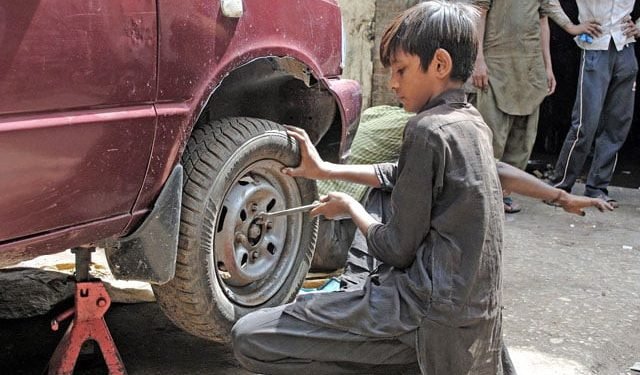

A report released jointly by the National Commission for Human Rights (NCHR) and UNICEF has revealed that 8.6 million children in Pakistan are engaged in child labour, with more than 6.6 million involved in hazardous work that poses serious risks to their health, safety, and future.
Titled “Pakistan: Child Labour Surveys, Evidence for Action,” the report presents the country’s first nationally representative dataset on child labour in nearly three decades. It provides a comprehensive picture of the scale, prevalence, sectors, risks, and underlying causes of child labour across Pakistan.
Speaking at the launch of the report, NCHR Chairperson Rabia Javeri Agha said that the last comprehensive survey on child labour in Pakistan was conducted in 1996. Since then, policymakers and development partners have relied on outdated or incomplete data for more than two decades.
She stressed that while child labour rates vary across provinces, hazardous child labour remains a widespread and alarming issue affecting children in every region of the country.
According to the report, Punjab bears the largest burden of child labour, with 6 million children engaged in work. Sindh follows with 1.6 million child labourers, while Khyber Pakhtunkhwa has 745,155 working children and Balochistan 201,352. In the Islamabad Capital Territory, 15,180 children were recorded as being involved in labour.

The report identifies poverty as the leading driver of child labour, noting that the practice is most prevalent among children from poor households and families with lower levels of parental education. Boys are significantly more likely than girls to be engaged in labour, particularly in hazardous occupations.
It further states that a substantial portion of child labour takes place within family settings, including work on family farms, in family workshops, and at home. As a result, this form of child labour largely remains outside the scope of conventional labour inspections and monitoring systems.
The findings also highlight the severe impact of child labour on children’s well-being. Children engaged in labour are more likely to be out of school, work long hours, and suffer from injuries, illnesses, fatigue, and mental health problems. Across different provinces, between 32 and 58 percent of working children reported experiencing an injury or illness while working, while up to one-third of older working children showed symptoms associated with depression.