333 blasphemy cases registered in five years; Punjab tops list
Senate committee told many cases stemmed from personal disputes, fabricated allegations and unidentified suspects; officials present provincial breakdown


At least 333 blasphemy cases were registered across Pakistan’s four provinces during the last five years, with Punjab reporting the highest number of cases, according to data presented before the Senate Functional Committee on Human Rights.
The committee was informed that a significant number of cases appeared to be linked with personal rivalries, family disputes and fabricated allegations, while several First Information Reports (FIRs) were registered against unidentified individuals, making prosecution and investigation more complicated.
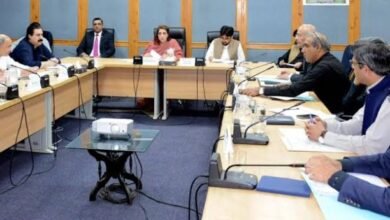
The briefing was presented during a meeting of the Senate Functional Committee on Human Rights chaired by Senator Samina Mumtaz Zehri. Provincial home secretaries, police officials and prosecution authorities shared details regarding registered cases, investigations and legal proceedings.
Punjab records highest number of cases
According to official data, Punjab recorded the highest number of blasphemy cases among all provinces, with 116 cases registered under Section 295-C of the Pakistan Penal Code (PPC), relating to defiling the name of the Holy Prophet (PBUH).
Police officials informed the committee that 56 per cent of these cases involved allegations made by Muslims against other Muslims, while 14 per cent involved members of religious minority communities.

Officials also highlighted concerns regarding misuse of blasphemy allegations, stating that several cases were found to have originated from personal conflicts rather than genuine religious concerns.
Sindh reports 125 cases under different sections
Sindh ranked second, with officials reporting:
- 96 cases registered under Section 295-B PPC, related to desecration of the Holy Quran.
- 29 cases registered under Section 295-C PPC.
Sindh police officials informed the committee that out of the 29 cases registered under Section 295-C between 2023 and June 2026:
- Challans were submitted in 22 cases.
- Two cases remained under investigation.
- Three FIRs were registered against unidentified suspects.
- Remaining cases were disposed of under the “C-Class” category due to legal or technical shortcomings.
Regarding Section 295-B cases, officials said challans had been submitted in 69 cases, while six cases were still under investigation. Four cases had been cancelled, whereas 17 FIRs were registered against unidentified persons.
KP reports more than 90 cases
Khyber Pakhtunkhwa reported more than 90 blasphemy cases during the period under review.The provincial authorities informed the committee that several cases were found to have emerged from personal disputes rather than religious matters.Director Prosecution KP Zeeshan Afridi shared an example of a case where children accused their own father of blasphemy following a domestic dispute.According to Afridi, during a heated argument at home, the father allegedly committed an act considered blasphemous in anger, after which his son approached police and registered a complaint.
Balochistan records lowest number of cases
Balochistan recorded the lowest number of cases, with 28 blasphemy cases reported during the last five years.DIG Dr Farhan Zahid informed the committee that almost all cases had been resolved, with only four cases remaining pending.
Police investigation procedures revised
Officials informed the committee that new Standard Operating Procedures (SOPs) had been introduced to prevent mob violence and ensure legal action in sensitive cases.The Punjab Home Department and police officials said authorities had moved away from previous practices where disputes were often informally mediated after blasphemy allegations emerged.Under the new mechanism, police are required to immediately register FIRs against named or unidentified suspects after receiving information about such incidents.Officials said the earlier approach of delaying legal action often allowed mobs to take the law into their own hands, resulting in violence and deaths.
Committee calls for scrutiny of cases
Senator Samina Mumtaz Zehri said the committee would review each registered case to identify possible misuse of the law.“We want to verify every registered case to ensure that there are no fake or fabricated cases and proper scrutiny can take place,” she said.She said blasphemy cases involved multiple stakeholders, including police, prosecution and courts, and required a thorough review.“Sometimes people attach personal beliefs and disputes with accusations of blasphemy, which is tragic,” she said, adding that suggestions from all stakeholders were being sought to improve the legal framework.The senator said the committee’s next meeting would be held in-camera to further examine the issue.
Religious scholars proposed in investigation teams
During the meeting, Jamiat Ulema-e-Islam (JUI) Senator Ata-ul-Haq Darvish questioned officials about whether religious scholars were part of initial investigation teams dealing with blasphemy cases.
Officials responded that religious scholars were currently not included in such teams.Senator Darvish proposed that religious scholars should be included at the preliminary investigation stage to provide religious guidance and help ensure accurate assessment of allegations.Officials told the committee that investigations into cases registered under Sections 295-B and 295-C were assigned only to senior officers, usually of Grade-17 or above, and special investigation teams were formed for sensitive cases.The committee emphasized the need for transparency, careful investigation and prevention of misuse while ensuring protection of legal rights for all citizens.