Beyond Ishmal’s Killing: How a Tragic Killing Exposes Gender-Based Violence and Child Protection Gaps in Swat


By Waqar Ahmed
SWAT: On September 9, 2026, the tragic death of a young schoolgirl, Ishmal, in Madyan, Upper Swat, sent shockwaves through the local community, prompting widespread protests and demands for justice. Her killing has not only devastated her family but also brought renewed attention to gender-based violence, child sexual abuse and the effectiveness of child protection mechanisms in Khyber Pakhtunkhwa.
Ishmal was the youngest of six siblings—five sisters and one brother. Her father had passed away several years earlier, leaving the family to cope with his absence. Her death has now confronted them with another devastating loss.
According to her uncle, Umar Gulab, Ishmal returned home from school on the day of the incident, changed out of her school uniform and went to a neighbouring house. Shortly afterward, a gunshot was heard. Another niece went to the house and discovered Ishmal dead.
Speaking to the media, Gulab demanded that those responsible be held accountable through the legal process, reflecting a family’s pursuit of justice amid grief and public outrage.
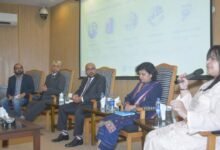

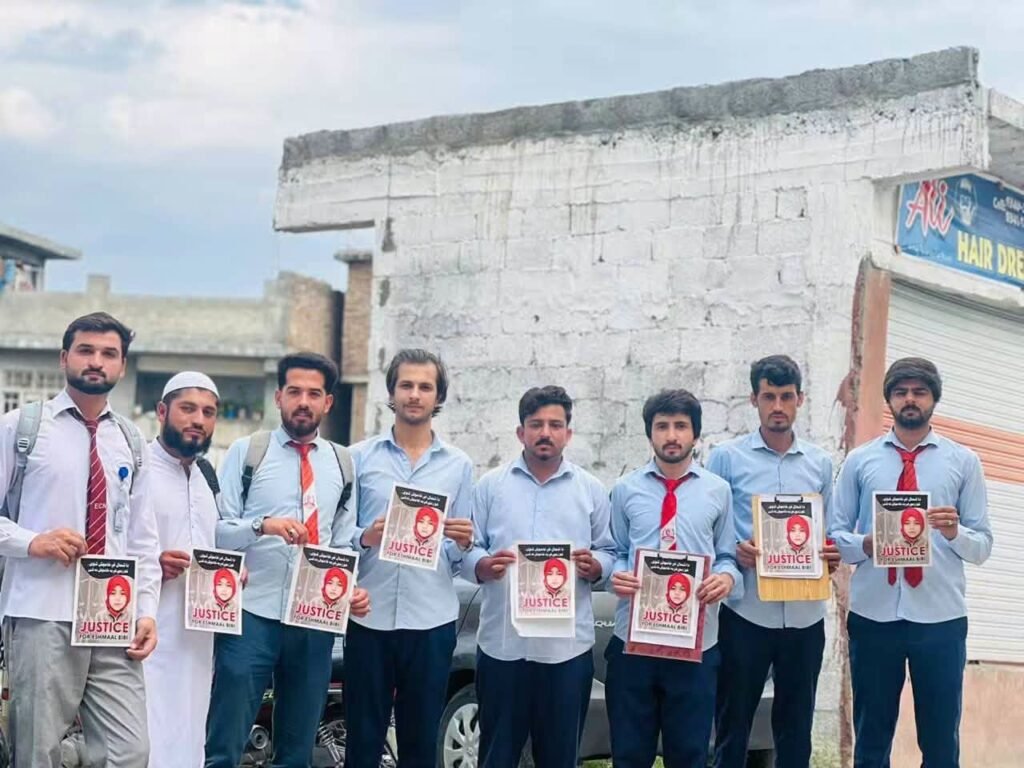
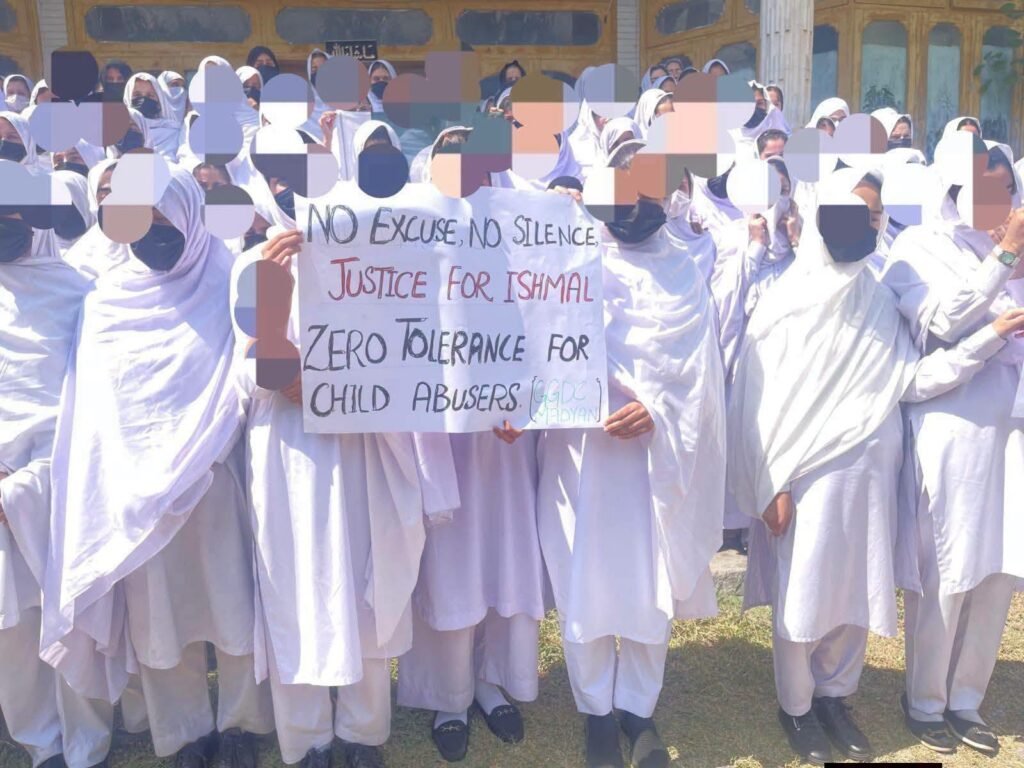
The incident triggered demonstrations in Madyan, where residents, lawyers, civil society activists, political workers and young people took to the streets to demand accountability and stronger safeguards for children.
Police Investigation: Arrests, Medical Evidence and Legal Proceedings
Following the incident, police registered First Information Report (FIR) No. 362/26 at Madyan Police Station on September 9, 2026, under Sections 302 and 376 of the Pakistan Penal Code and Section 53 of the Khyber Pakhtunkhwa Child Protection and Welfare Act, 2010.
District Police Officer (DPO) Upper Swat Mushtaq Khan said the principal suspect had been arrested and sent to jail on judicial remand.
Police also arrested the suspect’s wife over allegations that she assisted in the crime and attempted to destroy evidence. These allegations have yet to be determined by a court, and both suspects remain entitled to the protections afforded by law, including the presumption of innocence.
According to police, the post-mortem examination documented injuries on Ishmal’s body and medical findings relevant to allegations of sexual violence. Investigators said the medical findings were being examined alongside other evidence to establish the circumstances surrounding her death.
A special investigation committee, comprising senior investigation officers and local police officials, was constituted to review the available evidence, examine the legal aspects of the case and oversee the investigative process.
Police officials maintained that the investigation would be conducted strictly on merit.
The arrests, post-mortem findings and formation of a special committee represent important investigative developments. However, the credibility of the proceedings will ultimately depend on the lawful collection and preservation of evidence, a thorough investigation, effective prosecution and a fair judicial process.
Beyond Arrests: Why Justice Must Rest on Evidence and Due Process
The arrest of suspects may represent progress in a criminal investigation, but it does not, by itself, establish criminal responsibility.
Similarly, public anger, however understandable, cannot substitute for admissible evidence, due process or an independent judicial determination.
The progress of Ishmal’s case must therefore be assessed through verified court records, official statements and evidence presented during legal proceedings rather than speculation or unsubstantiated claims.
Investigators and prosecutors carry the responsibility of establishing the facts, preserving relevant evidence, pursuing credible leads and ensuring that the proceedings comply with the law.
For Ishmal’s family, regular access to accurate information, appropriate legal assistance and necessary support services is equally important as the case moves through the justice system.
Public demonstrations following the killing reflected deep concern over the safety of children and the community’s demand for accountability. Lawyers, political workers, civil society representatives and local youth participated in protests, while some lawyers reportedly announced that they would not represent the accused.
Although such reactions demonstrate the intensity of public outrage, the right to legal representation and a fair trial remains a fundamental principle of criminal justice.
Khyber Pakhtunkhwa’s Child Protection Law: A Framework Facing Questions of Implementation
The inclusion of Section 53 of the Khyber Pakhtunkhwa Child Protection and Welfare Act, 2010, in Ishmal’s FIR has brought renewed attention to the province’s existing legal framework for protecting children.
The legislation provides a statutory foundation for child protection, but the existence of a law does not automatically guarantee that vulnerable children can access protection, report abuse or receive timely assistance.
According to figures attributed to child protection authorities, 25 cases of child sexual abuse were reported in Swat during the first eight months of 2026.
These reported cases do not necessarily reflect the full extent of child sexual abuse in the district. Underreporting, barriers to accessing services and differences in reporting practices may affect the available statistics.
Nevertheless, the figures raise serious public-interest questions about the accessibility and effectiveness of existing child protection arrangements.
How easily can families in Madyan and other communities report suspected abuse? Are trained child protection professionals accessible at the local level? What arrangements exist for referrals between police, healthcare providers, social welfare institutions and legal assistance services?
Equally important is whether affected children and their families can obtain appropriate medical care, psychosocial support and legal assistance without facing unnecessary barriers.
These questions require clear, evidence-based responses from the relevant district and provincial authorities.
An assessment of the child protection system should examine the availability of services, the functioning of reporting mechanisms, the coordination between responsible institutions and the resources available to communities, particularly in remote areas.
Such scrutiny should not begin with an assumption that a particular institutional failure caused Ishmal’s death. Rather, it should establish which safeguards existed, how they operated and whether documented evidence reveals weaknesses requiring corrective action.
More Than 17,000 Reported Cases: What National Figures Reveal About Violence and Protection
The concerns raised by Ishmal’s killing extend beyond Swat and connect with wider challenges involving the protection of women and children across Pakistan.
Irfan Hussain Babak, executive director of the civil society organisation The Awakening, cited reports indicating that more than 17,000 cases were recorded across Pakistan during 2025.
According to the figures he provided, the provincial and territorial breakdown included:
- Punjab: 12,800 reported cases
- Sindh: 3,187 reported cases
- Khyber Pakhtunkhwa: 855 reported cases
- Islamabad: 431 reported cases
Together, these figures account for 17,273 reported cases across the four jurisdictions identified. However, the precise categories, definitions and reporting methodologies underlying these figures need to be established before they can be treated as directly comparable indicators of violence.
Babak stressed that although Khyber Pakhtunkhwa has a child protection law, effective implementation remains essential. He also expressed concern over reports of children being subjected to sexual violence and subsequently killed.
His observations highlight the importance of looking beyond the numerical scale of reported violence and examining the institutional response.
Available statistics can help identify patterns, geographic disparities and potential gaps in access to reporting and support services. However, reported cases cannot, on their own, establish the actual prevalence of abuse or explain differences between provinces.
Variations may reflect reporting practices, population sizes, the accessibility of institutions and the definitions used to categorise incidents.
A stronger evidence base, supported by transparent reporting and consistent definitions, would help policymakers evaluate existing interventions, identify underserved communities and allocate protection resources more effectively.
It would also enable institutions to assess whether reported cases lead to timely investigations, access to appropriate assistance and outcomes consistent with legal requirements.
Gender-Based Violence: Understanding the Wider Challenge
Gender-based violence is frequently associated with unequal power relations, discrimination and harmful social practices that undermine the rights, safety and dignity of women and girls.
Violence against children also presents specific protection challenges because of their age, dependency and vulnerability to coercion, exploitation and abuse.
Ishmal’s case brings these concerns into sharp focus, but a single incident cannot establish the overall prevalence, underlying causes or patterns of violence across Swat.
Such conclusions require verified statistical data, credible research, expert assessment and information from the institutions responsible for protection, investigation and support.
A comprehensive response must recognise the relationship between gender-based violence and child protection while also acknowledging that violence against children requires specialised, child-centred safeguards.
These safeguards include age-appropriate reporting procedures, trained professionals, protection of children’s privacy and dignity, access to healthcare and psychosocial assistance, and legal processes designed to minimise further harm.
Public debate should also avoid treating sexual violence exclusively as a law-enforcement problem.
Police investigations and criminal prosecutions are essential, but prevention requires action across multiple institutions and levels of society.
Schools, Families and Communities: Building a Stronger System of Prevention
Schools, families, healthcare professionals, community leaders and civil society organisations all have roles in developing safer environments for children.
Children need access to trusted adults and safe, age-appropriate ways of seeking assistance when they experience threats, coercion, harassment or abuse.
Schools can contribute by promoting awareness of personal safety, establishing appropriate reporting arrangements and ensuring that concerns are referred to trained professionals rather than handled informally in ways that could place children at further risk.
Families and caregivers also need reliable information about recognising potential warning signs, responding sensitively to disclosures and accessing formal protection services.
Healthcare workers can play an important role in identifying possible abuse, providing appropriate treatment and connecting affected children with specialised services.
Community leaders and civil society organisations can help reduce stigma, encourage responsible reporting and improve awareness of available assistance.
Men and boys must also be included in efforts to challenge harmful attitudes, reject violence and promote respect for the rights and dignity of women and girls.
However, awareness campaigns alone cannot provide adequate protection.
They must be supported by functioning referral systems, trained personnel, effective coordination between institutions and services that remain accessible to families living outside major urban centres.
For communities such as Madyan, the availability of practical assistance at the local level is particularly important.
Institutional Accountability: Questions Authorities Must Answer
The public interest arising from Ishmal’s death extends beyond identifying and prosecuting those found responsible.
It also requires an examination of the systems intended to prevent abuse and support children at risk.
Relevant authorities should explain what child protection services currently operate in Swat, how accessible those services are to remote communities and whether existing reporting and referral mechanisms function effectively.
They should also clarify how the police, social welfare authorities, healthcare institutions and other relevant bodies coordinate when allegations of child sexual abuse are reported.
A credible assessment should consider whether families have timely access to medical examinations, appropriate psychological support, legal assistance and reliable information about the progress of reported cases.
Another important question concerns the use of available data.
Are reported incidents systematically documented and assessed to identify recurring protection needs? Are authorities using the information to improve services, strengthen prevention and address potential institutional weaknesses?
Answers to these questions should be supported by official records, documented procedures and evidence of how policies operate in practice.
Such scrutiny is not intended to prejudge the investigation into Ishmal’s death or assign responsibility without evidence.
Its purpose is to determine whether existing safeguards are adequate and identify improvements that may help protect other children.
The Media’s Responsibility: Reporting Beyond the Initial Headlines
The killing of a child can generate widespread public concern, but responsible journalism requires careful handling of both the individual case and the wider issues it raises.
For journalists, the responsibility does not end with reporting arrests, protests or police statements.
It also includes verifying legal developments, examining court records, seeking responses from relevant authorities and assessing the availability of child protection services.
Reporting should clearly distinguish between allegations, investigative findings, medical evidence and facts established through judicial proceedings.
It should avoid speculation about guilt and refrain from publishing unnecessary details that could compromise the dignity and privacy of a child victim or cause additional harm to surviving family members.
Public-interest journalism can also contribute by examining how child protection legislation is implemented, whether services reach remote communities and what measurable steps authorities are taking to address documented gaps.
At the same time, any institutional shortcomings should be established through verifiable evidence rather than assumptions arising from an individual tragedy.
Justice for Ishmal Must Also Strengthen Protection for Other Children
Ishmal’s death has left a grieving family and a community seeking answers. The criminal investigation carries the immediate responsibility of establishing what happened, identifying any criminal responsibility supported by evidence and ensuring that the case proceeds through a fair and effective legal process.
That responsibility is fundamental, but the wider public interest does not end with the conclusion of criminal proceedings.
The case also provides an opportunity to examine how child protection mechanisms operate in Swat and whether families can access effective assistance before violence occurs.
Provincial and district authorities should be held accountable for explaining the safeguards currently in place, the implementation of relevant laws and the measures being taken to improve prevention, reporting and support services.
Their explanations must be assessed against documented evidence, legal obligations and the practical needs of children and families.
The public response in Madyan demonstrates that the demand for justice is strong. Translating that concern into meaningful improvements, however, requires sustained institutional engagement, credible information and practical measures that can be evaluated over time.
Justice and prevention are not competing priorities. They are complementary responsibilities.
Ishmal’s killing must not be reduced to another tragedy remembered only through protests and headlines. Its lasting significance should also be measured by whether the questions it has raised lead to greater scrutiny, stronger safeguards and more effective protection for children.
Protecting children’s rights, safety and dignity is not a responsibility that begins after a tragedy. It is an obligation that institutions and society must fulfil every day.