Flooding, Forest Decline Top Environmental Concerns in Gilgit-Baltistan: Survey
Small-scale survey finds residents increasingly noticing environmental changes, with extreme weather, deforestation and habitat loss among key concerns


By Hijab Zehra
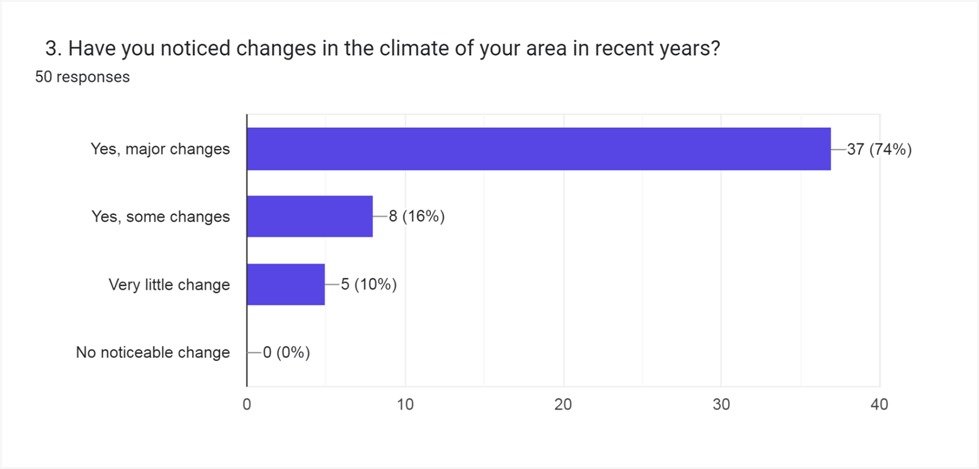
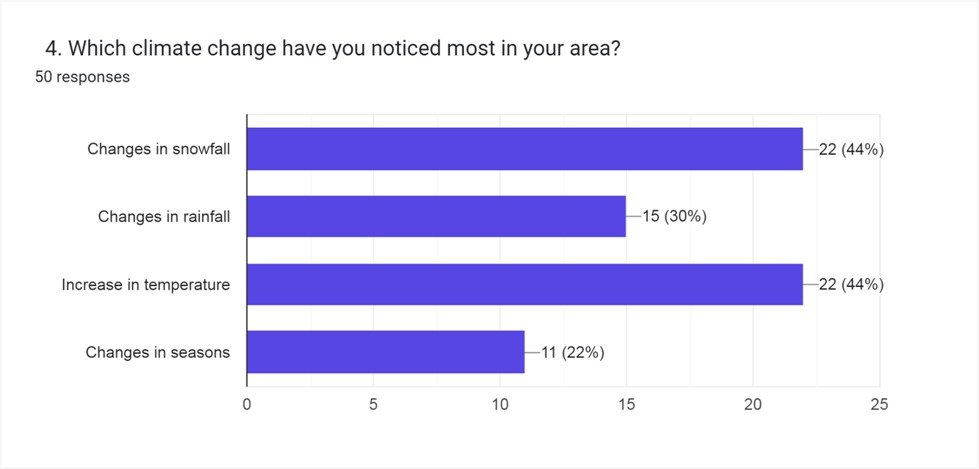
GILGIT-BALTISTAN: Flooding and extreme weather, deforestation and damage to natural habitats have emerged as leading environmental concerns among people in Gilgit-Baltistan, according to a survey conducted for this story.The survey of 50 respondents found that 74 percent had noticed at least some changes in climate and environmental conditions in their areas in recent years. While the findings do not represent the entire population of Gilgit-Baltistan, they offer a snapshot of how a group of residents perceive environmental changes and risks in the region.
Flooding and extreme weather emerged as the most frequently identified concern, selected by 50 percent of respondents. Deforestation followed at 36 percent, while 22 percent identified waste and pollution and 18 percent pointed to water-related problems.Respondents could select more than one option, so the percentages do not add up to 100 percent.
Flooding and extreme weather
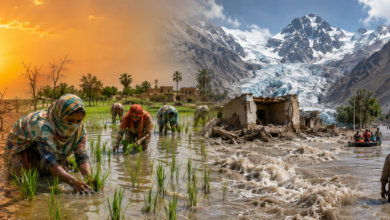
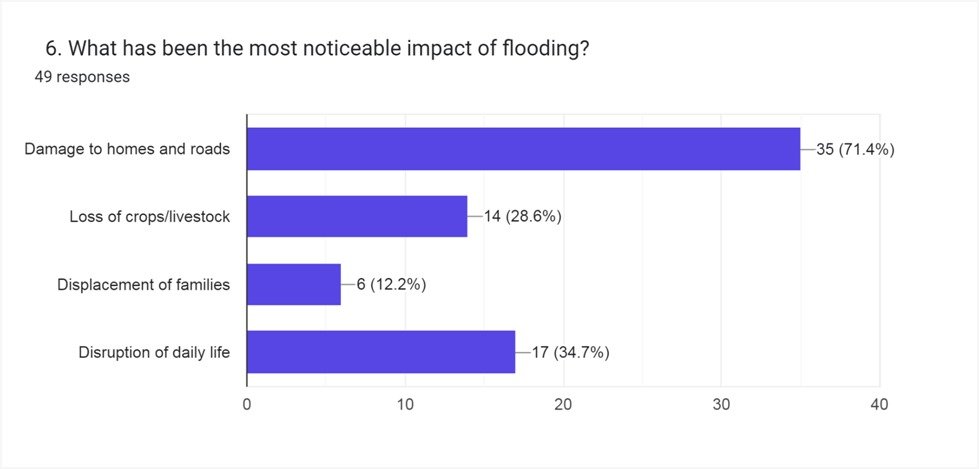
Flooding and extreme weather can disrupt roads, homes, farmland, irrigation systems and other infrastructure, particularly in vulnerable mountain communities.In northern Pakistan, the United Nations Development Programme (UNDP) has been working to address risks associated with glaciers and glacial lake outburst floods (GLOFs). Its GLOF-II programme includes early-warning systems, community preparedness and disaster-risk reduction measures in vulnerable areas of Gilgit-Baltistan.
The survey, however, does not establish that the floods or extreme-weather events observed by participants were caused by climate change. It records these events as environmental concerns reported by respondents.
Forests and habitats under concern
The survey also found widespread concern about forests and natural habitats.Eighty-six percent of respondents reported either some or a major decrease in forests, while 90 percent said they had observed some or major negative effects on natural habitats.
These figures represent respondents’ observations rather than an independent assessment of the extent of forest loss or habitat degradation across Gilgit-Baltistan.The concerns are significant in a region where forests and natural habitats support biodiversity, ecosystems and communities and are closely linked to environmental resilience.
Glaciers and water remain critical
Glaciers, rivers and other water resources are closely connected to daily life in Gilgit-Baltistan. Water is essential for households, agriculture and other activities, making changes in glaciers, snowfall and precipitation particularly relevant to local communities.
UNDP programmes in the region include glacier and water monitoring, sustainable agriculture, disaster-risk management and community-based adaptation. Climate-risk assessments by the Asian Development Bank (ADB) and World Bank have also identified risks to water resources, ecosystems, livelihoods and communities from climate-related hazards in Pakistan.
Climate awareness varies
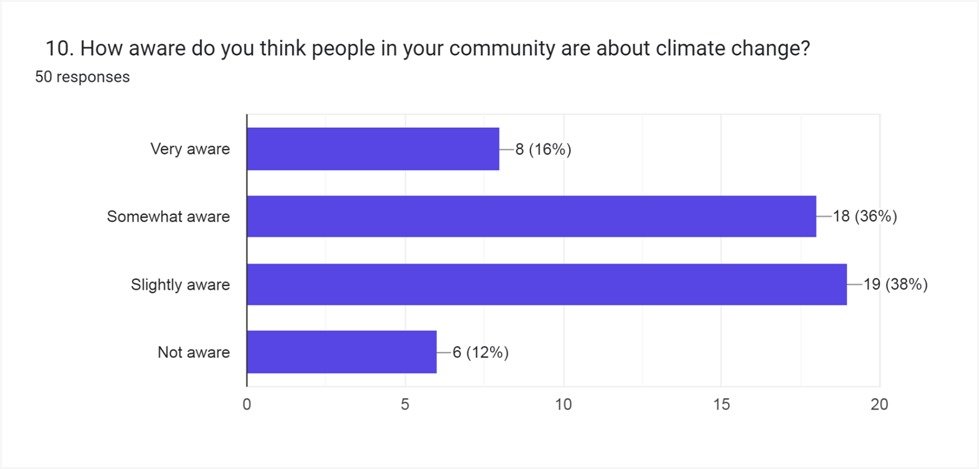
Despite widespread observations of environmental change, respondents reported varying levels of awareness about climate issues.Of the 50 participants, 38 percent described themselves as slightly aware of climate change, 36 percent as somewhat aware, 16 percent as very aware and 12 percent as not aware.
The responses suggest that noticing environmental changes and understanding the broader science of climate change are not necessarily the same. The findings also point to a potential need for accessible public information on climate risks and adaptation.
What residents want to see
Respondents identified several measures they considered important for strengthening climate resilience in Gilgit-Baltistan.Public climate awareness was selected by 48 percent, followed by forest and habitat protection at 40 percent, stronger government and community action at 38 percent, and improved flood preparedness at 20 percent.The responses highlight four recurring areas: public awareness, environmental conservation, community participation and disaster preparedness.
Young people seen as part of the response
Young people were also identified by respondents as having a role in addressing environmental challenges.Awareness and education was the most frequently selected area, at 58 percent, followed by tree plantation and conservation at 38 percent, community and volunteer activities at 32 percent, and media and social-media campaigns at 20 percent.
The responses indicate that participants see young people not only as recipients of climate information but also as potential contributors through awareness campaigns, conservation activities, volunteering and responsible communication.
A local snapshot of a wider challenge
The survey does not measure climate change across Gilgit-Baltistan and should not be read as a population-wide assessment. Instead, it captures what 50 participants reported noticing and the measures they considered important.Still, several concerns recur throughout the responses: flooding and extreme weather, declining forests, damage to natural habitats, water-related challenges and uneven levels of climate awareness.
For communities living among mountains, glaciers, forests and rivers, environmental change is closely connected to everyday life from roads and water supplies to agriculture, homes and livelihoods.The findings therefore offer a small but useful window into how residents perceive the environmental pressures facing Gilgit-Baltistan and what they believe could strengthen the region’s resilience.