As Floodwaters Recede, Punjab Braces for a Second Disaster: Disease Threatens Millions in Relief Camps

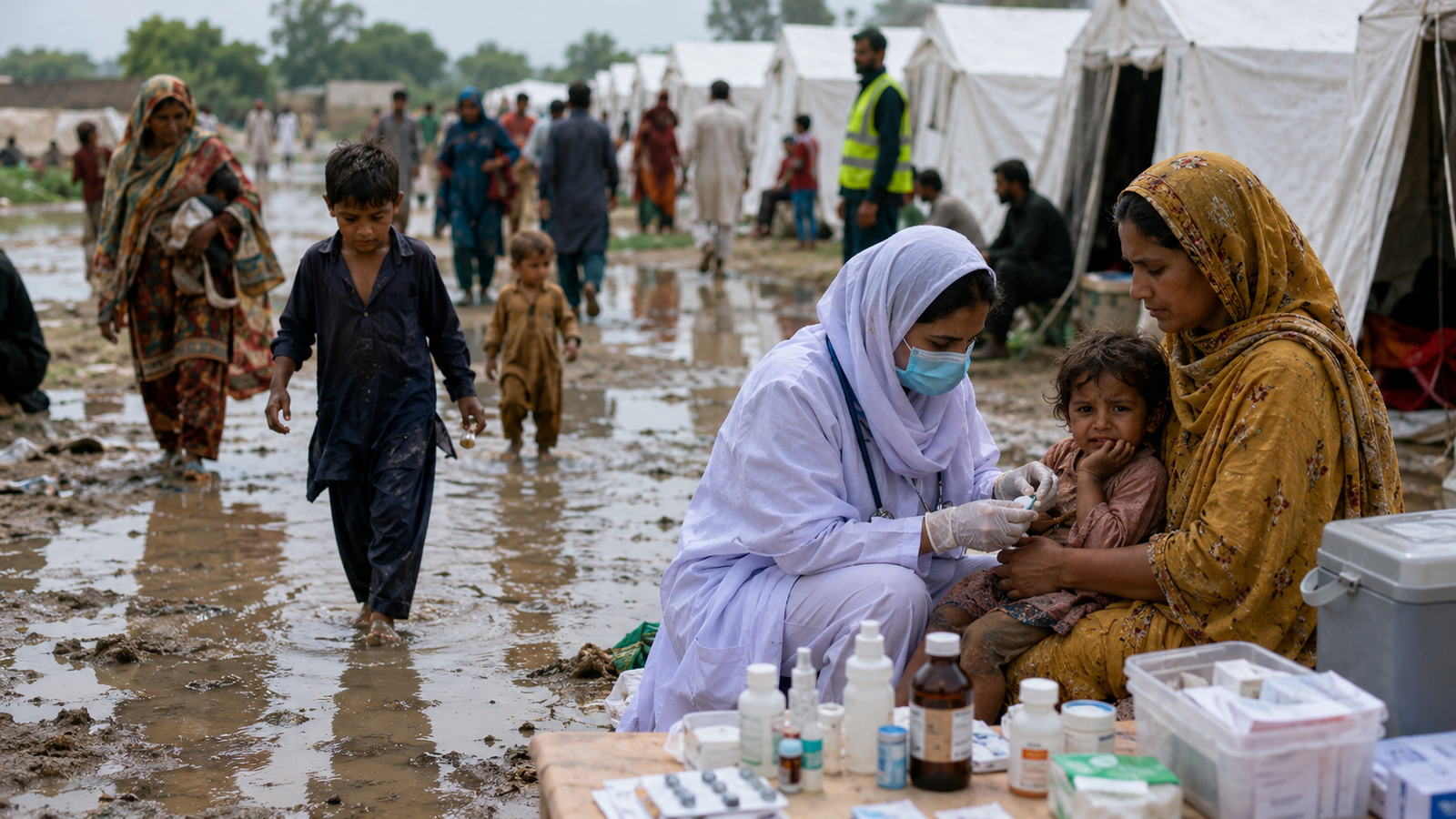

ISLAMABAD: Even as rescue teams continue evacuating families stranded by floodwaters across Punjab, health experts are warning that the province may now be entering an equally dangerous phase of the disaster – one driven not by rising rivers, but by the rapid spread of disease in overcrowded communities and relief camps.
With more than four million people affected by the monsoon floods, damaged health infrastructure, contaminated drinking water, stagnant pools and disrupted vaccination services are creating conditions for outbreaks of diarrhoeal diseases, dengue, malaria and other communicable illnesses.
Health officials say hospitals in several flood-hit districts are already reporting a sharp increase in patients suffering from waterborne and vector-borne diseases, raising concerns that the public health emergency could intensify in the coming weeks if preventive measures are not scaled up.
According to official figures available until this week, around 158,000 flood-affected people have sought treatment for various illnesses linked to the disaster. These include more than 49,500 cases of chest infections, 20,945 cases of diarrhoea, thousands of patients with skin and eye infections, as well as 143 dog-bite cases and 88 snake-bite incidents reported from public health facilities operating in affected districts.
Public health specialists caution that these numbers are likely to rise as floodwaters remain stagnant in many areas and access to healthcare continues to be disrupted.

Dr. Masood Sheikh, a senior public health expert, says the health consequences of flooding often emerge after the immediate emergency has passed.
“The loss of life caused by floodwaters is only the first phase of the disaster. Once clean water supplies are contaminated and sanitation systems collapse, communities become vulnerable to infectious diseases that can spread rapidly, particularly among displaced families,” he said.
He warned that prolonged exposure to contaminated water, combined with overcrowded living conditions in temporary shelters, could trigger outbreaks of diarrhoea, gastroenteritis, skin infections and mosquito-borne diseases. Interruptions in routine immunisation campaigns also increase the risk of vaccine-preventable diseases such as measles and polio, especially among young children.
Health workers say stagnant floodwater has created ideal breeding conditions for mosquitoes, increasing fears of dengue and malaria as temperatures remain favourable for mosquito activity across Punjab.
While medical teams have been deployed to relief camps, humanitarian workers say women and children remain among the most vulnerable groups.
Pregnant women displaced by the floods face particular challenges in accessing antenatal care and emergency obstetric services. Flood-damaged roads and disrupted transport networks have made it difficult for many expectant mothers to reach hospitals, while temporary shelters often lack private spaces, clean washrooms and adequate sanitation facilities.
Public health experts also warn that pregnant women living in flood-affected communities are at increased risk of hepatitis A and E infections because of contaminated drinking water and poor sanitation. Nutritional deficiencies are another growing concern as many families continue to rely on emergency food assistance.
For adolescent girls and women, the crisis extends beyond medical care. Limited access to menstrual hygiene products, insufficient washing facilities and the absence of gender-segregated toilets in some relief camps are creating serious health and protection concerns.
Children are facing a separate emergency.
Humanitarian agencies warn that contaminated water, disrupted vaccination programmes and inadequate sanitation increase the risk of diarrhoeal disease and malnutrition among young children. Extended displacement has also interrupted schooling for thousands of children, while health workers are increasingly concerned about the psychological impact of prolonged uncertainty and displacement.
Despite ongoing government efforts, concerns remain about the availability of preventive health supplies.
Provincial authorities have initiated procurement of mosquito nets, spray equipment and millions of water purification tablets as part of disease prevention measures. However, public health experts believe these interventions need to be accelerated, warning that delays in distributing essential supplies could reduce their effectiveness as disease transmission increases.
Experts say controlling the next phase of the emergency will depend on ensuring uninterrupted access to safe drinking water, improving sanitation in relief camps, restoring routine vaccination services, strengthening disease surveillance and expanding mobile medical teams across flood-hit districts.
The floods have once again exposed how climate-related disasters extend far beyond the immediate destruction caused by rising water. As families struggle to rebuild their lives, doctors warn that preventing disease outbreaks may become one of the biggest challenges facing Punjab’s emergency response in the weeks ahead.