Who Failed Rural Pakistan?
Why Rural Development Has Not Become Pakistan's Development Priority


Every year, World Rural Development Day reminds governments around the world that sustainable development does not begin in capital cities , it begins in villages. In Pakistan, however, rural development has rarely received the sustained political attention it deserves. While governments have launched numerous agricultural reforms, rural support programmes and donor-funded initiatives over the past several decades, millions of people living in rural areas continue to struggle with poverty, inadequate healthcare, poor education, declining agricultural incomes and increasing climate vulnerability.
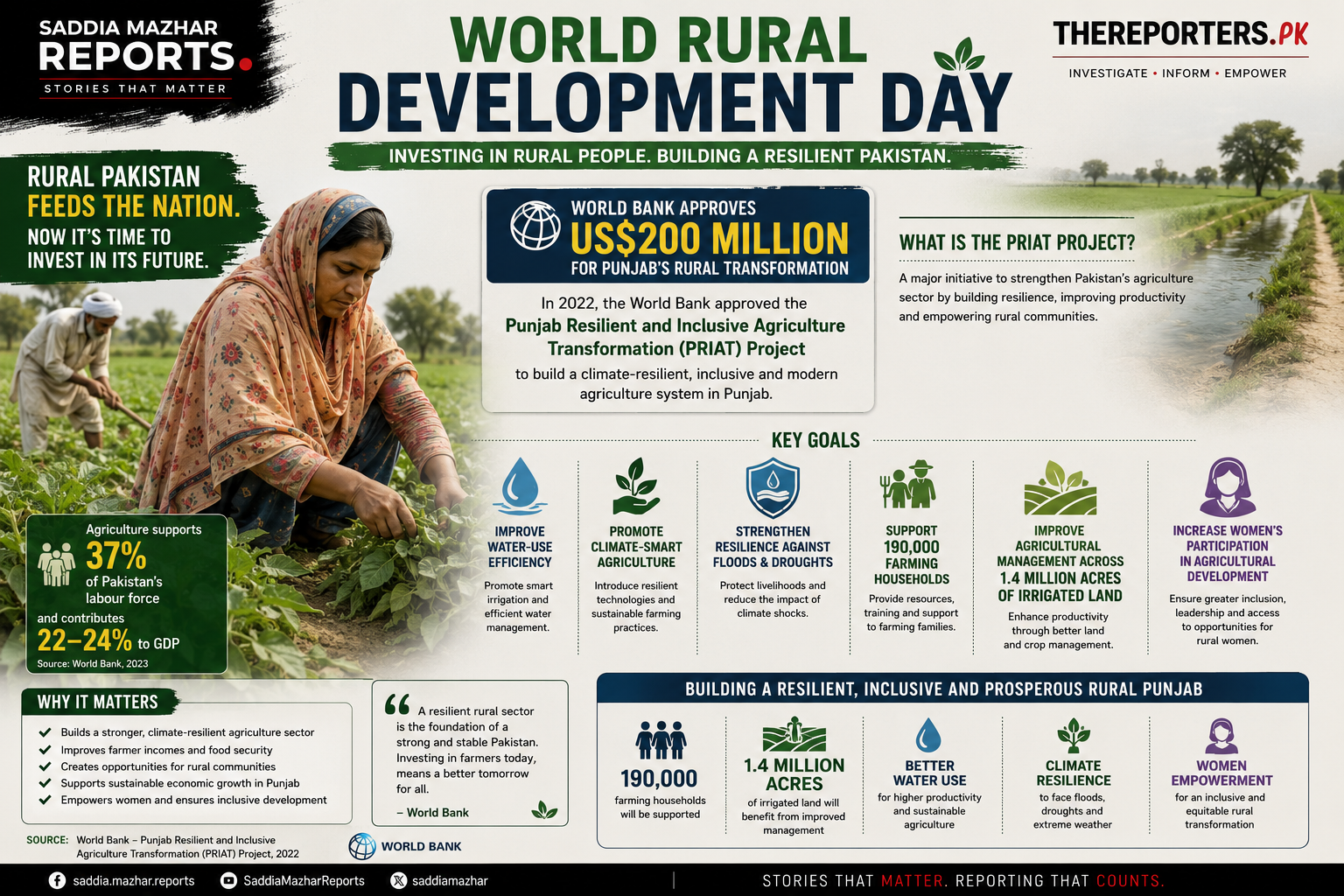
This raises an important question: Has rural development ever truly been treated as a national priority, or has agriculture been viewed as a sector that produces food without investing in the people who produce it?The answer matters because Pakistan remains fundamentally a rural country. According to the Pakistan Bureau of Statistics, nearly 60 percent of Pakistan’s population lives in rural areas. Agriculture contributes approximately 22–24 percent of Pakistan’s Gross Domestic Product (GDP) and employs around 37 percent of the country’s labour force. According to the World Bank, Punjab produces nearly 73 percent of Pakistan’s food, making it the country’s agricultural heartland. Yet despite its economic importance, rural Pakistan continues to lag behind urban centres in education, healthcare, infrastructure, digital connectivity and income opportunities.The contradiction is striking. The sector that feeds the nation is itself struggling to survive.
The World Bank has repeatedly argued that Pakistan’s agricultural growth has remained below its potential because public investment has historically focused on short-term subsidies rather than long-term investments in research, innovation, climate resilience, efficient irrigation, modern farming technologies and value addition. Instead of building a competitive agricultural economy capable of adapting to climate change and increasing farmer incomes, policies have often concentrated on maintaining existing systems that no longer meet today’s challenges.
Punjab illustrates this challenge clearly. The province has one of the largest contiguous irrigation systems in the world, highly fertile soils and generations of farming experience. Yet agricultural productivity has remained relatively stagnant for years compared with its potential. Farmers continue to face rising costs for fertilizer, diesel, electricity, seeds and pesticides, while unpredictable weather and fluctuating market prices further reduce profitability. Small farmers, who make up the majority of agricultural producers, often lack access to modern machinery, quality seed varieties, affordable credit and reliable technical advice.
The World Bank’s Strengthening Markets for Agriculture and Rural Transformation (SMART) programme concluded that agricultural policies must shift from generalized subsidies toward investments in research, farmer training, market reforms, climate-smart agriculture and efficient water management if Pakistan hopes to increase productivity and rural incomes. This is not simply an agricultural issue; it is an economic development issue affecting millions of households.Perhaps no issue better reflects the failures of rural development than the invisible contribution of rural women.

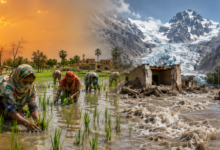
Across Pakistan’s villages, women participate in nearly every stage of agricultural production. They sow crops, transplant rice, harvest cotton, manage livestock, produce dairy products, care for poultry, clean seeds, process harvested crops and often collect water and fuelwood for their families. Yet much of this work remains unpaid and unrecognized.According to the World Bank’s Punjab Resilient and Inclusive Agriculture Transformation (PRIAT) Project, approximately 74 percent of women in Punjab depend on agriculture for their livelihoods. Around half of rural women work as agricultural or family labourers, yet nearly three-quarters receive no direct payment for their work, as their contribution is categorized as unpaid family labour.This means that the economic backbone of many farming households is effectively invisible within formal labour markets.
The reasons are deeply structural. Rural women rarely own agricultural land, limiting their ability to access institutional credit, government subsidies or agricultural extension services. Decision-making regarding crops, finances and investments often remains concentrated in male family members, even though women contribute substantial labour throughout the agricultural cycle. As a result, women remain essential to food production but are excluded from many of the economic benefits generated by agriculture.Ignoring women’s unpaid labour is not only a gender issue; it is also an economic issue. Countries that fail to recognize and support women’s productive contributions risk reducing agricultural productivity, household incomes and overall rural development.
Another growing challenge is the rapid disappearance of fertile agricultural land.Punjab has historically been known as Pakistan’s breadbasket. However, fertile farmland surrounding major cities such as Lahore, Sheikhupura, Gujranwala, Faisalabad and Multan is increasingly being converted into housing societies, commercial developments and expanding urban infrastructure. At the same time, agricultural land faces additional pressures from soil degradation, waterlogging, salinity, declining organic matter and unsustainable farming practices.
The Food and Agriculture Organization (FAO) has repeatedly warned that soil degradation and unsustainable land management threaten agricultural productivity across Pakistan. Meanwhile, the World Bank has emphasized that efficient land use and resource management are essential if Pakistan is to maintain long-term food security. Every acre of fertile land lost to poorly planned urban expansion represents not only reduced agricultural production today but also diminished food security for future generations.
Land loss is only one part of the broader environmental crisis confronting rural Pakistan.Climate change has fundamentally altered farming conditions across the country. Rising temperatures, erratic rainfall, prolonged heatwaves, recurring droughts and increasingly frequent floods have disrupted traditional agricultural calendars and increased production risks. The devastating floods of 2022 demonstrated how climate disasters disproportionately affect rural communities, destroying crops, livestock, irrigation systems and household incomes within days.
Recognizing these challenges, the World Bank approved a US$200 million Punjab Resilient and Inclusive Agriculture Transformation (PRIAT) Project in 2022. The project aims to improve water-use efficiency, promote climate-smart agriculture, strengthen resilience against floods and droughts, support approximately 190,000 farming households, improve agricultural management across 1.4 million acres of irrigated land, and increase the participation of women in agricultural development.
These commitments represent an important step forward. However, the real measure of success lies not in project approvals or funding announcements but in implementation. Have farmers actually received climate-smart technologies? Are modern irrigation systems reaching villages? Have women farmers benefited from training programmes? Has agricultural productivity improved? These are questions that can only be answered through field reporting, government records and independent monitoring.
Climate adaptation also requires greater investment in agricultural research and innovation.Many developed agricultural economies invest heavily in developing climate-resilient crop varieties, precision agriculture, digital advisory services and efficient irrigation systems. Pakistan, however, continues to invest comparatively little in agricultural research despite facing some of the world’s highest climate risks. Without stronger research institutions, better extension services and improved technology transfer, small farmers will struggle to adapt to increasingly unpredictable weather conditions.
Another area requiring urgent investigation is the allocation of public resources.Every year, provincial and federal governments announce billions of rupees in development spending for agriculture, irrigation and rural development. International organizations including the World Bank, the Asian Development Bank (ADB), the Food and Agriculture Organization (FAO) and the International Fund for Agricultural Development (IFAD) have also financed numerous projects aimed at improving rural livelihoods, strengthening agricultural markets and reducing poverty.
Yet the persistence of rural poverty raises difficult questions. Who actually benefits from agricultural subsidies? Do small farmers receive the same level of support as large landowners? Are women farmers included in government programmes? Have extension services reached remote villages? Are climate adaptation projects delivering measurable improvements? Most importantly, how are governments evaluating whether these investments are producing lasting results?
These are not questions of political rhetoric; they are questions of governance and accountability.Rural development should no longer be viewed solely through the lens of agriculture. It encompasses education, healthcare, clean drinking water, digital connectivity, financial inclusion, local governance, women’s economic empowerment, environmental sustainability and climate resilience. Sustainable agricultural growth cannot occur in communities where schools are under-resourced, healthcare facilities are inadequate, women remain economically invisible and young people migrate because they see no future in farming.
If Pakistan genuinely seeks long-term economic growth, food security and climate resilience, rural development must become a national priority rather than an afterthought. Investment should move beyond short-term subsidies toward research, innovation, technology adoption, efficient water management, women’s economic participation, land protection and stronger local institutions.
World Rural Development Day should therefore not be reduced to symbolic speeches or ceremonial events. It should serve as an opportunity to ask difficult but necessary questions. Why do the people who feed the nation remain among its most economically vulnerable? Why does unpaid female agricultural labour continue to sustain rural households without recognition? Why is fertile farmland disappearing while concerns about food security continue to grow? Why have decades of public spending and international assistance not transformed rural livelihoods to the extent promised?
Pakistan’s future will not be determined solely by the growth of its cities. It will also depend on whether its villages receive the investment, innovation and policy attention they have long been denied. Rural development is not simply about improving agriculture; it is about ensuring that the people who sustain the country’s economy are themselves given the opportunity to prosper. Until that happens, Pakistan’s development story will remain incomplete.