Power at What Cost? The Unfinished Story of Pakistan’s Sahiwal Coal Power Plant

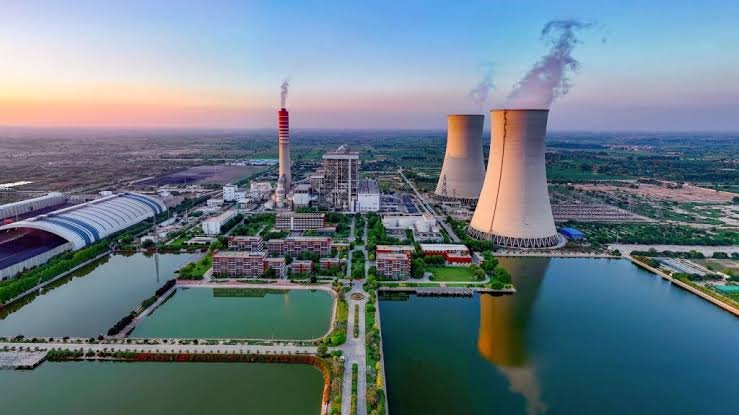

As you cross Qadirabad on the Lahore–Sahiwal highway, three towering chimneys rise above the green fields that once defined this fertile agricultural belt. Thick white-grey plumes drift continuously into the sky, stretching across villages and rows of old trees. From a distance, they resemble clouds. Up close, they are emissions from the 1,320-megawatt Sahiwal Coal Power Plant, one of the largest coal-fired power stations built under the China-Pakistan Economic Corridor (CPEC).
When construction began in 2014, Pakistan was battling crippling electricity shortages. Successive governments argued that emergency investment in coal-fired generation was essential to end prolonged load-shedding and revive the economy. Built at a cost of approximately US$1.912 billion, the Sahiwal project became one of CPEC’s flagship early-harvest initiatives. Commercial operations began in 2017, and the plant has since remained a major contributor to the national grid.
Nearly a decade later, however, the debate surrounding the project has changed.Pakistan no longer suffers from an acute shortage of installed electricity generation capacity. Instead, it faces record-high electricity tariffs, mounting circular debt and a rapidly growing shift towards rooftop solar energy. As the country’s energy landscape evolves, questions are also being raised about the long-term economic and environmental cost of relying on imported coal.For residents living around Qadirabad, however, the debate has never been limited to megawatts.It is about the air they breathe.
The Silent Health Question
Unlike Lahore or Karachi, Sahiwal has never been the subject of a comprehensive public-health study examining the long-term effects of living near a coal-fired power plant. Yet doctors, residents and environmental researchers say respiratory illnesses appear to have become increasingly common in communities surrounding the project.
Older residents remember a time when pulmonology was rarely considered a major medical specialty in Sahiwal. Today, chest physicians are increasingly visible in public and private hospitals. Local clinics frequently report patients complaining of persistent coughs, asthma, throat irritation and recurring eye infections, particularly during the winter smog season.


No scientific study has conclusively established that the Sahiwal Coal Power Plant is the direct cause of these illnesses. Air pollution across Punjab is influenced by multiple sources, including crop-residue burning, brick kilns, industrial emissions, heavy traffic and seasonal weather conditions that trap pollutants close to the ground.
Yet the absence of scientific certainty highlights another problem.
No federal or provincial institution has conducted a long-term epidemiological study comparing disease trends before and after the plant became operational. There is no publicly available baseline health survey for surrounding villages, nor has any continuous health-monitoring programme been introduced despite the project’s scale.
For a power plant that transformed more than a thousand acres of agricultural land and represented one of Pakistan’s largest foreign investments in the energy sector, the lack of long-term health surveillance raises important questions about environmental governance.
International research has consistently linked emissions from coal-fired power plants including fine particulate matter (PM2.5), sulphur dioxide and nitrogen oxides to higher risks of asthma, chronic obstructive pulmonary disease, cardiovascular disease and premature mortality. A 2024 scientific study conducted around the Sahiwal plant also found elevated concentrations of heavy metals in nearby soils, suggesting an environmental footprint associated with coal combustion, although the study did not examine direct health outcomes.For villagers, however, statistics matter less than everyday experience.
“We never used to think about the air we breathed,” one elderly resident told this writer during an earlier visit to Qadirabad. “Now almost every household knows someone suffering from persistent cough or breathing problems.”
Whether those illnesses are primarily linked to emissions from the coal plant, Punjab’s wider smog crisis or a combination of pollution sources remains unanswered. That unanswered question may itself be one of the project’s greatest failures.
Promises made, Promises questioned
When land acquisition began in 2014, many residents believed the sacrifice would secure a better future.Farmers surrendered fertile agricultural land after being assured that the project would create employment, improve local infrastructure and bring better schools, healthcare and clean drinking water to surrounding communities.
Some accepted compensation and moved to nearby cities. Others invested in small businesses. Many say they never managed to replace the livelihoods they lost.
During a visit in 2022, several former landowners told this writer they had received financial compensation but no assistance in acquiring replacement farmland or rebuilding sustainable sources of income. They also questioned why such a large imported-coal project had been established in one of Punjab’s most productive agricultural regions.Those concerns have not disappeared.
In 2025, Dawn reported fresh protests outside the power plant, where residents again raised concerns about displacement, environmental impacts and unfulfilled development commitments. The company has consistently maintained that the project complies with Pakistan’s environmental regulations and uses supercritical coal technology designed to improve efficiency and reduce emissions compared with older coal-fired plants.The competing narratives reflect a broader national debate.For the government, Sahiwal helped reduce electricity shortages during a critical period.For many residents, the promise of development remains incomplete.And for Pakistan, the question has become even larger: as the country moves towards renewable energy, does one of its biggest coal plants still represent the future—or a costly legacy of the past?
The economics of imported power
On paper, the Sahiwal Coal Power Plant remains one of Pakistan’s most powerful electricity-generating assets. The facility consists of two 660-megawatt supercritical units with a combined installed capacity of 1,320 megawatts. Developed by Huaneng Shandong Ruyi (Pakistan) Energy Limited, the project cost approximately US$1.912 billion and began commercial operations in October 2017 as one of the earliest CPEC energy projects.
Unlike coal-fired plants located near coal mines, Sahiwal depends entirely on imported fuel. Every shipment of coal arrives at Karachi Port before travelling more than 1,200 kilometres by rail to Punjab. When operating at full capacity, the plant consumes roughly 8,000 tonnes of imported coal every day, making it one of Pakistan’s largest consumers of imported thermal coal.
This dependence has exposed the project to global fuel prices and logistical disruptions. In September 2025, Profit reported that the company warned federal authorities that coal stocks had fallen to critically low levels because of delays in railway transportation and shortages of freight wagons. The report highlighted how Pakistan’s reliance on imported coal leaves even one of its flagship power plants vulnerable to supply-chain disruptions.Yet the larger question is no longer whether the plant can produce electricity.It is whether Pakistan still needs all the electricity it was built to generate.According to the company, the answer is yes.
In July 2025, Profit reported that during its annual capacity test, the Sahiwal plant generated 1,252 megawatts, exceeding the benchmark of 1,243.5MW established by regulators. Company officials described the performance as evidence that the plant remains technically efficient and capable of delivering reliable electricity whenever called upon by the national grid.Energy economists, however, distinguish between capacity and utilisation.
A report published in October 2025 by the Institute for Energy Economics and Financial Analysis (IEEFA), in collaboration with the Pakistan-China Institute and Renewables First, concluded that Pakistan’s imported-coal fleet—including the Sahiwal plant—is now operating at less than 20 per cent utilisation. The report attributes the decline to slower electricity demand, weaker industrial activity and the rapid expansion of rooftop solar systems across Pakistan.The distinction is critical.
A power plant may be capable of producing more than 1,200 megawatts, but if it is dispatched only occasionally, consumers may still bear significant financial obligations through capacity payments agreed under long-term power purchase contracts.
The IEEFA report argues that these fixed payments continue regardless of how much electricity is actually produced, contributing to Pakistan’s growing circular debt and increasing the cost of electricity for consumers.
The report also estimates that retiring imported-coal plants such as Sahiwal five to ten years earlier than planned could prevent 27 to 38 million tonnes of carbon dioxide emissions while potentially avoiding billions of dollars in future capacity-payment obligations. Those findings have intensified debate over whether Pakistan should continue investing in imported fossil fuels when renewable technologies are becoming increasingly affordable.The government faces a difficult balancing act.
Supporters of the Sahiwal project argue that it fulfilled its original purpose by helping Pakistan overcome one of the worst electricity crises in its history. Without projects like Sahiwal, they argue, prolonged load-shedding could have continued to damage the country’s economy.Critics counter that the circumstances that justified imported coal in 2014 are no longer the same today.
Pakistan now has surplus installed generation capacity, while businesses and households are rapidly turning to rooftop solar in response to rising electricity prices. The country also remains among the world’s most climate-vulnerable nations, despite contributing only a small share of global greenhouse gas emissions.That contradiction is difficult to ignore.
Pakistan has pledged to expand renewable energy and reduce carbon emissions, yet billions of dollars remain tied to imported-coal infrastructure built during an era of emergency energy planning.For residents of Qadirabad, however, the national energy transition remains an abstract discussion.
Their concerns are immediate and deeply personal: clean air, safe drinking water, productive farmland and better healthcare for their children.Nearly ten years after construction began, the Sahiwal Coal Power Plant stands as both an engineering achievement and a symbol of the difficult choices Pakistan made to end its electricity crisis.It helped keep the lights on.But the questions surrounding its legacy have only grown louder.
How much has Pakistan ultimately paid not only in foreign exchange and capacity payments, but in environmental degradation, public health uncertainty and the loss of fertile agricultural land?And perhaps the most important question of all remains unanswered: if billions were invested in the name of development, why has no independent long-term health study ever been conducted to determine what that development has meant for the people living in its shadow?
Until those questions are answered with transparency, science and accountability, the white-grey plumes rising above Qadirabad will remain more than a by-product of electricity generation. They will continue to symbolise a national debate over how Pakistan should power its future and who ultimately bears the cost.