Islamabad Tree-Cutting Controversy Deepens as Senate Panel Exposes Governance Gap

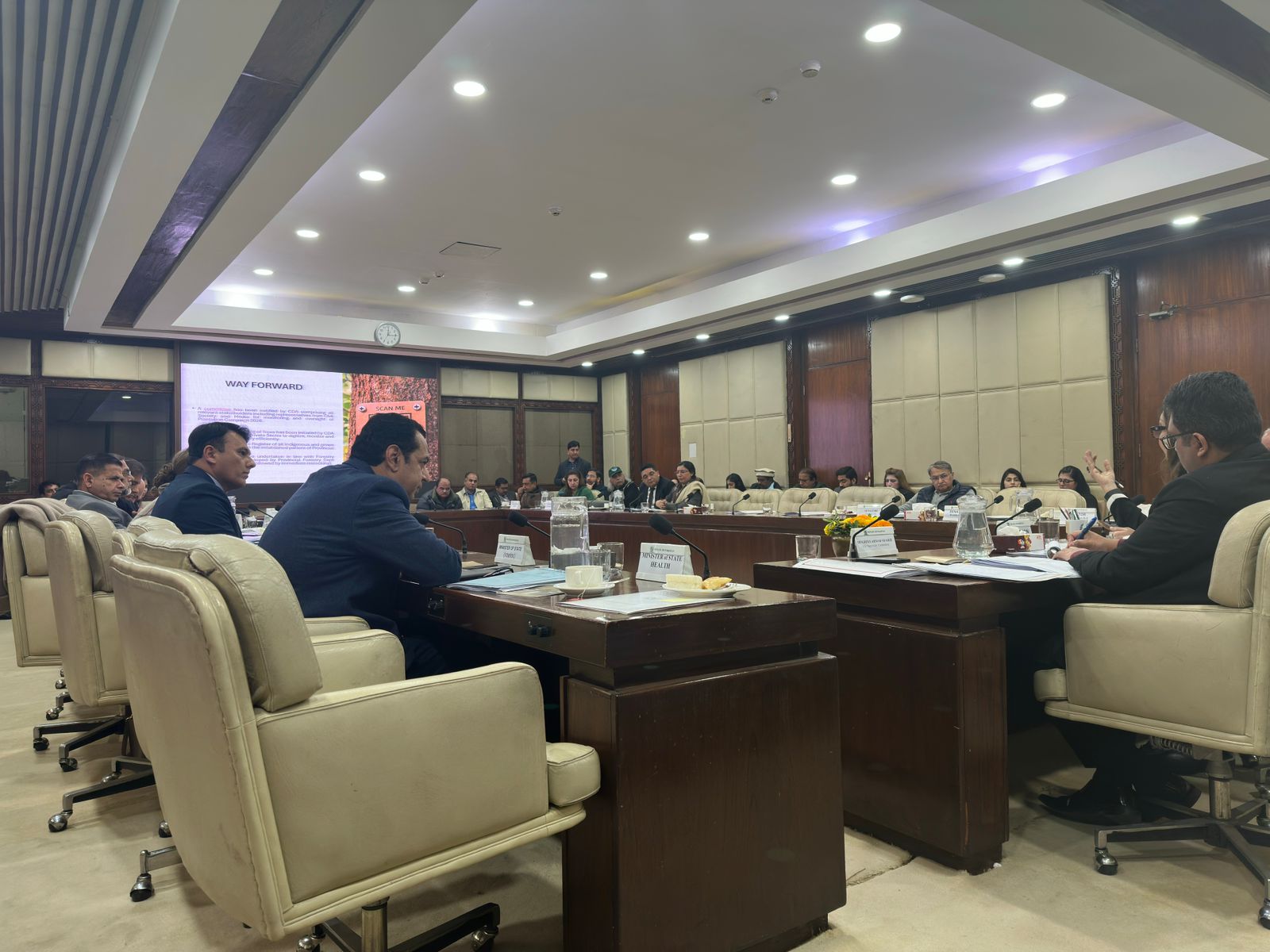

The controversy surrounding large-scale tree cutting in Islamabad, particularly the removal of Paper Mulberry trees intensified further during a meeting of the Senate Standing Committee on Climate Change and Environmental Coordination, chaired by Senator Sherry Rehman. Instead of settling public concerns, the meeting exposed serious gaps in coordination, transparency, and political ownership, further fueling debate over environmental governance in the federal capital.
The issue has remained under intense public scrutiny since early January, when senior investigative journalist Umar Cheema shared a video on X (formerly Twitter) showing extensive tree cutting in Islamabad. The footage went viral, triggering widespread public backlash and prompting detailed coverage by Dawn, as citizens and environmentalists questioned the scale, planning, and timing of the operation.
A visibly tense atmosphere prevailed during the Senate committee meeting, particularly after the head of the Forest Department arrived only five to ten minutes before the meeting concluded. Senator Sherry Rehman openly expressed her displeasure, questioning the seriousness of the department’s response to an issue of national concern.


“Even if it is your first day, attending such an important meeting is your responsibility. We attend briefings even on our first day. What justification is this?” she remarked, underscoring expectations of accountability from relevant institutions.
Public skepticism has been amplified by conflicting official statements. While Interior Minister Mohsin Naqvi had earlier taken notice on social media of massive tree cutting in areas such as Shakarparian, H-8, and Park Road, Interior Minister Talal Chaudhary, representing the Interior Ministry at the meeting, categorically stated that all tree cutting carried out by the Capital Development Authority (CDA) was done with ministerial approval, under a defined mechanism, and fully endorsed by the Interior Ministry.
This apparent contradiction has generated fresh controversy, raising questions about internal coordination and policy consistency within the government.
During the meeting, CDA Chairman Muhammad Ali Randhawa presented a detailed briefing, stating that more than 12,000 Paper Mulberry trees had been removed from various parts of Islamabad as part of a campaign to address the city’s severe pollen allergy problem. To counter deforestation concerns, he said over 40,000 new trees each measuring five to seven feet have been planted across the capital. while dawn report tells another different story.
In a personal disclosure, Randhawa said that he himself suffers from pollen allergy, highlighting the public health motivation behind the initiative. Health data shared by the Ministry of Health appeared to support the CDA’s position, showing a decline in confirmed pollen allergy cases from 16,250 in 2023 to 14,747 in 2024, and further down to 12,449 in 2025, despite high testing volumes.
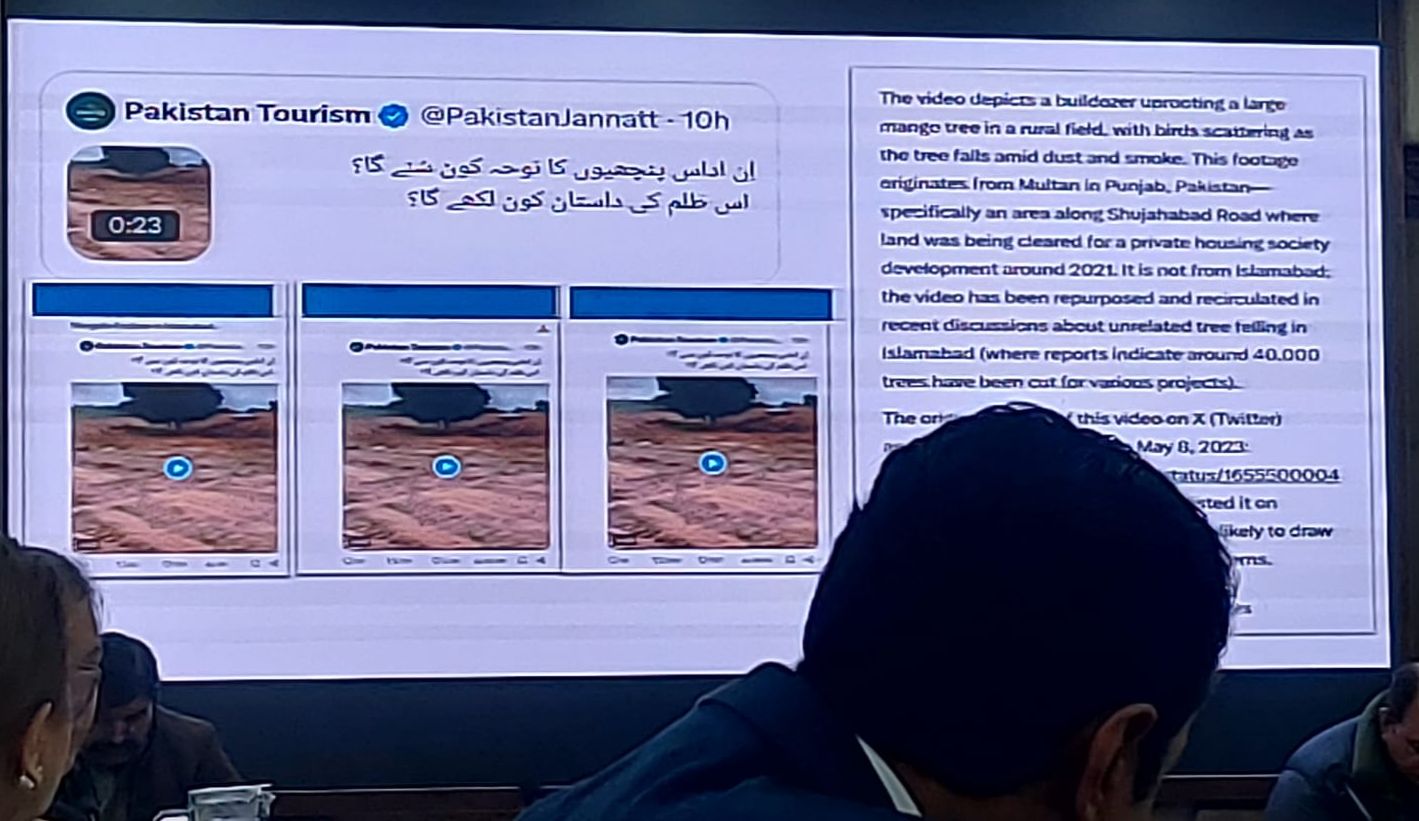
However, many concerns raised by citizens on social media were either dismissed or described as misrepresentation. CDA officials presented images sourced from a social media account operating under the name “Pakistan Tourism,” including visuals allegedly showing a banyan (Bargad) tree being cut. Randhawa categorically rejected the footage, stating that it was fake, unrelated to Islamabad, and constituted deliberate misinformation that could be independently verified.
Despite these clarifications, criticism on X has remained sharp. Ghulamuddin, writing on X, questioned whether the forest in question consisted only of Paper Mulberry trees and whether only 15 acres were affected. He pointed out that while the CDA chairman may not be fully aware, the Parks and Environment Department should know how many years it takes for even a small tree to grow. He also recalled that a portion of F-9 Park was completely cleared two years ago, despite being a habitat for rare wildlife and a vital “lung” for Islamabad. Today, he noted, the cleared area contains nothing but grass, warning that if current policies continue, residents may soon struggle to see trees and greenery in the capital.
Zainab Naseem, posting on X, raised concerns about the transparency of the operation and questioned the ecological justification provided for large-scale removals.
Amir Husain on X questioned the clearing of a two to two-and-a-half kilometre stretch of trees for the Margalla Enclave–DHA road access, claiming that the trees removed were Sheesham, not Paper Mulberry, and asking what kind of pollen allergy those trees were allegedly causing. The user further questioned why recently developed CDA nurseries worth billions of rupees were also being relocated, asking whether those, too, were considered allergenic.
Environmental concerns were echoed by Shehroz Azhar, who wrote on X that the rapid pace of tree cutting in Islamabad was contributing to rising pollution levels. He warned that if unchecked “concreteization” continues, the capital could lose its environmental identity and begin to resemble Lahore and Karachi in terms of pollution and ecological degradation.
Meanwhile, the CDA also shared a press talk on social media highlighting its ongoing tree plantation drive. This, too, faced backlash, with users questioning how plantation activities were being carried out during a season widely considered unsuitable for planting.
Interior Minister Talal Chaudhary defended the government’s broader development and environmental interventions, stating that all actions were taken institutionally under approved policies, not on the orders of any individual, including the CDA chairman. Addressing concerns related to Muslim Colony and Mandri, he said commitments were being fulfilled responsibly and lawfully, particularly where sensitive or religious sites were involved.
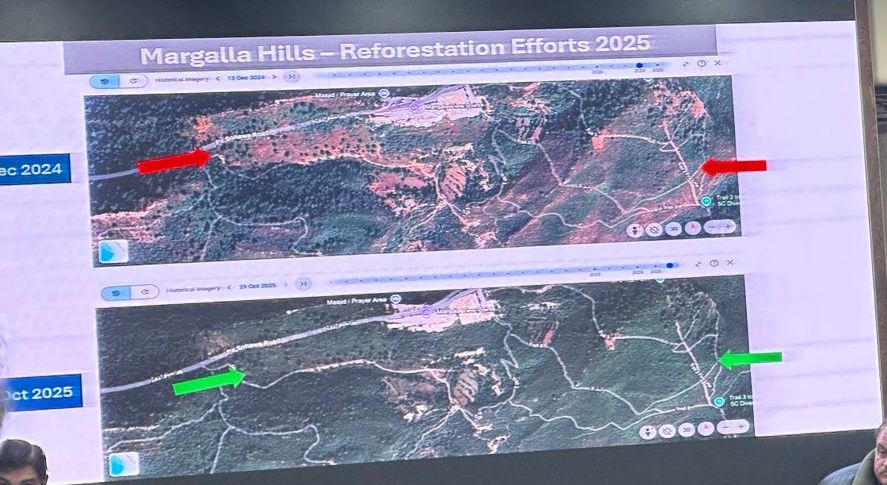
He emphasized that expert consultation and scientific methods were mandatory and assured that if anything had been removed incorrectly, it would be rectified and responsibility fixed. Rejecting claims of unchecked “concreteization,” Chaudhary said no changes had been made outside the approved Master Plan. He further claimed that over 1,030 hectares of illegally occupied land previously converted from green to brown areas had been reclaimed and restored to green status through anti-encroachment drives.
Despite these assurances, serious questions were raised over weak parliamentary oversight. Only two senators attended the meeting, despite 14 members being nominated, while the Federal Minister for Climate Change and Environment was notably absent even as the issue dominated national discourse.
Observers note that while the CDA insists social media is spreading “fake propaganda” and maintains that the operation is scientifically planned, poor communication, delayed public engagement, and visible contradictions at the policy level have eroded public trust.
Environmental experts argue that even scientifically sound policies require transparency, public consultation, and strong political presence to gain public confidence. As Islamabad continues to grapple with balancing development, public health, and environmental protection, the tree-cutting controversy has evolved into a broader test of governance, coordination, and accountability in climate policymaking.
Senior journalist Rauf Klasra criticised the Senate Standing Committee and public bodies on X, questioning why Federal Climate Change Minister Dr. Musadik Malik repeatedly skips committee meetings and appears to avoid accountability, despite missing both the previous and current sessions. He pointed out the contrast in Chairperson Sherry Rehman’s strict treatment of other officials for delays or absence versus her silence over Dr. Malik’s non-attendance. Klasra also highlighted a photo showing Rehman addressing empty chairs meant for the federal minister and minister of state, noting that Senate interest had dwindled to just one member present, raising serious questions about quorum and oversight.