IMF and OICCI assess Pakistan’s economy amid regional uncertainty
Fund representative notes stabilization efforts while cautioning about external risks

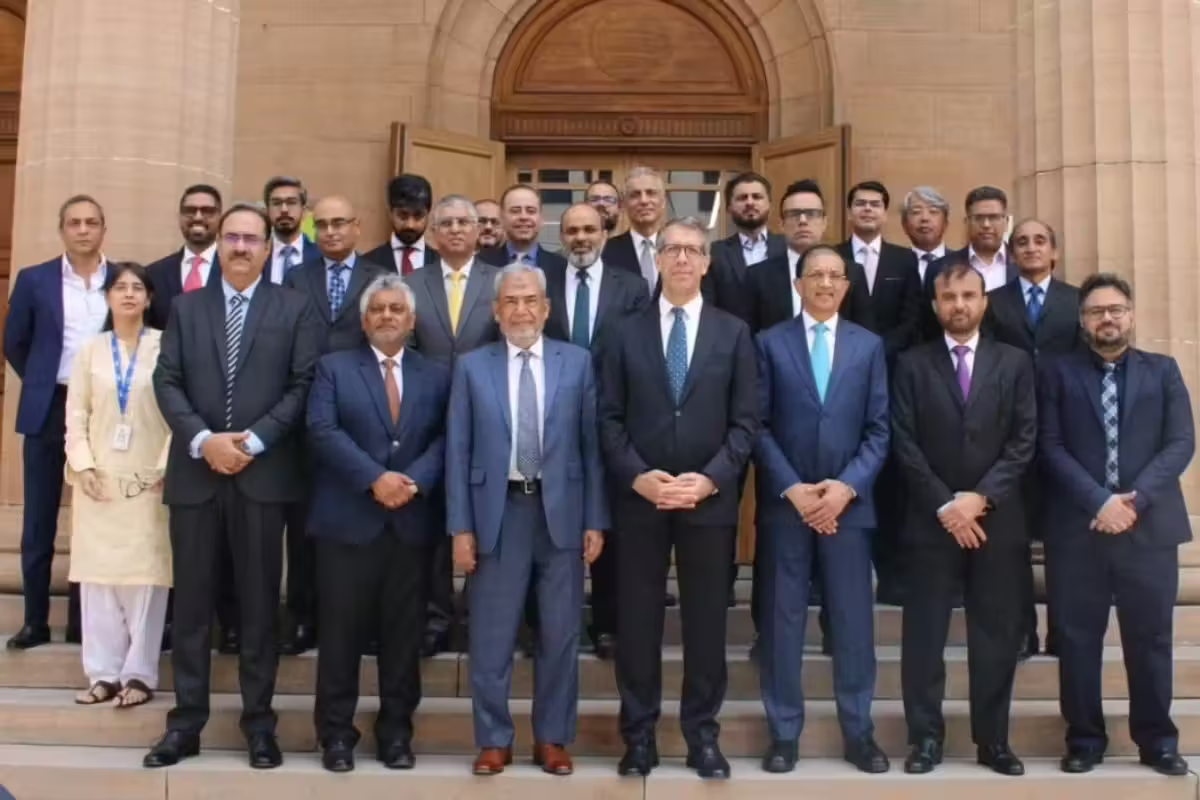

The Overseas Investors Chamber of Commerce and Industry (OICCI) hosted IMF Resident Representative in Pakistan Mahir Binici on May 11 for a session on Pakistan’s economic outlook amid growing global and regional economic uncertainty, including the ongoing conflict in the Middle East.
The discussion focused on the completion of the third review of Pakistan’s IMF programme and the broader implications of regional geopolitical tensions on the country’s economy.
Speaking during the session, Binici said Pakistan’s stabilization measures under the IMF-supported programme had contributed to restoring investor confidence, strengthening external financial buffers and improving macroeconomic stability.
Following the successful completion of the third review, the IMF Executive Board approved the release of $1.1 billion under the Extended Fund Facility (EFF) and an additional $200 million under the Resilience and Sustainability Facility (RSF). With the latest tranche, Pakistan has received a total of $4.8 billion under both arrangements.
The session also examined the possible economic impact of the continuing Middle East conflict, particularly rising global oil prices and volatility in international energy markets. Participants discussed how prolonged regional instability could affect Pakistan’s growth outlook, inflation, remittance inflows, exchange rate management and external account performance.

Binici noted that despite signs of economic stabilization, Pakistan remained vulnerable to increasingly challenging global conditions and external economic shocks.
Representatives of OICCI member companies engaged in discussions on several key policy areas, including fiscal discipline, structural reforms, energy pricing, tax broadening, exchange rate flexibility and banking sector resilience.
Participants stressed the importance of maintaining the momentum of economic reforms and ensuring policy consistency and predictability to strengthen investor confidence and support sustainable long-term growth.
The meeting comes as Pakistan continues efforts to stabilize its economy under the IMF programme while navigating external pressures stemming from global inflation, high energy costs and geopolitical uncertainty in the region.